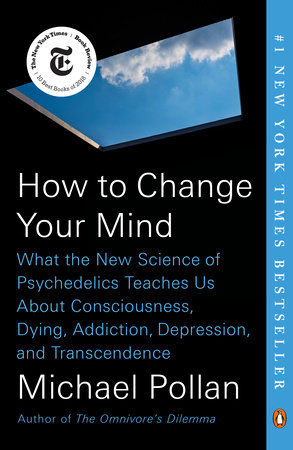
How to Change Your Mind – Michael Pollan

Michael Pollan How to Change Your Mind book cover

What the New Science of Psychedelics Teaches Us About Consciousness, Dying, Addiction, Depression, and Transcendence

In this book, journalist Michael Pollan explains the history, science, and research of psychedelics as well as his own personal experiences. It is part science book and part personal journey/memoir. Pollan clearly has his biases when it comes to spiritual and mystical matters, but he does his best to set these aside (along with his neurotic tendencies) in exploring new ideas. This following quote from his website sums it up well:

But what I didn’t expect when I embarked on this journey was for it to result in what is surely the most personal book I’ve ever written. I like to immerse myself in whatever subject I’m reporting—whether that means buying a steer to understand the meat industry or apprenticing myself to a baker to understand bread. What began as a third-person journalistic inquiry ended up a first-person quest to learn what these medicines had to teach me about not only the mind but also my mind, and specifically about the nature of spiritual experience. This book has taken me places I’ve never been—indeed, places I didn’t know existed.

Michael Pollan – website

Topics

The cultural history of psychedelic substances – Many cultures throughout history have incorporated psychedelics into aspects of religious life and spiritual practices. Mr Pollan traces the history of some of these in various indigenous cultures.

Early scientific research on psychedelics – The history of LSD and the promising research on it for treating mental health conditions, substance abuse, and more in the 1950s and 1960s.

Countercultural revolution and the fallout – Timothy Leary and the culture wars are discussed and how this lead to political fallout and the abandonment of research on LSD and other psychedelic substances.

Transcendent experiences – The author explains the renewed interest and research on psychedelics and his own experiences under the influence. This is where the book shifts a bit from strictly science journalism into a more memoir-style.

Recommendation

I really liked this book. It will likely inform and challenge you. The author clearly has his own biases about spiritual and mystical matters, but he’s willing to explore areas that he once completely neglected. I give him major credit for that. He’s also a talented writer, so it’s not a difficult read or overly scientific. It’s definitely appropriate for the Eclectic Reading List.

You can learn more about the author and this book on his website. Here’s a link to the Wiki page for this book. Below is a video from a presentation at Google about his book and the topic of psychedelics.

Featured image from Penguin Random House.

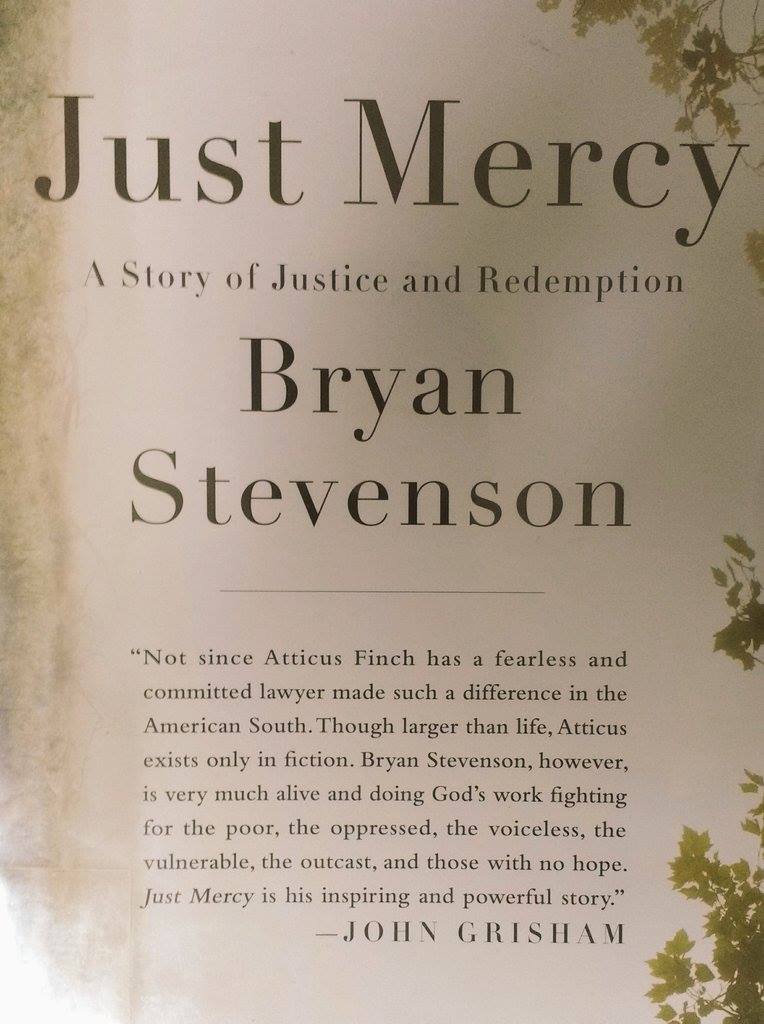
Just Mercy: A Story of Justice and Redemption – Bryan Stevenson

just mercy bryan stevenson book cover

A bold and brave look at injustice and racism in America

How committed are we to justice in America? Are we consistent with this commitment to justice, or are some groups given preferential treatment while others are discriminated against? Bryan Stevenson is a lawyer who founded the Equal Justice Initiative and has occasionally been in the headlines over the years for his work in defending people of color on death row. “Just Mercy” addresses the inconsistencies we have in our judicial system and looks at ways to make things better.

The true measure of our character is how we treat the poor, the disfavored, the accused, the incarcerated, and the condemned.

We are all implicated when we allow other people to be mistreated.

Bryan Stevenson, Just Mercy

Themes

Injustice in our judicial system – There’s no ignoring the statistics. Black men are significantly more likely to be arrested and imprisoned than white men, even when you factor in the same crimes. Black men are also sentenced to the death penalty far more often. This isn’t just some artifact from our country’s white supremacist past, this is current-day America.

American incarceration – The United States has the highest rate of incarceration in the world. Does this mean we have more lawless people or are the laws themselves (and how they are enforced) the real issue? I think it’s pretty obvious that the latter is the case.

The death penalty – Since the science has finally arrived with DNA evidence, many people who were wrongfully sentenced to death row have been exonerated. The author makes a great point about the morality surrounding this question – “The death penalty is not about whether people deserve to die for the crimes they commit. The real question of capital punishment in this country is, Do we deserve to kill?”

Recommendation

I can’t recommend this book enough. It is very well done, but it is also incredibly sad. My heart breaks to think of how many people have unjustly suffered under the cruel judicial system we have here in the USA. It can be easy to turn a blind eye to statistics, but when you take a moment to hear the stories and the people who have suffered, you can’t look away and pretend you didn’t hear. I suppose you can try, but you’d only be deceiving yourself.

You can find Just Mercy on Amazon here. You can learn more about the book on the EJI website. The book is being made into a movie – more on that here.

The Left Hand Of Darkness – Ursula K. Le Guin

ursula le guin left hand of darkness book cover

A Sci-Fi epic that challenges how you look at humanity

This novel is a wild mix of science fiction and fantasy that took me along for an interesting journey. It is complex, contains action and adventure, and does a fascinating job of showing how tricky it can be when trying to communicate across cultures. If you can get a newer edition and read the author’s introduction, you might find that alone to be worth getting the book (I thoroughly enjoyed it!). The Left Hand Of Darkness won two “Best Novel” awards in 1970 – the Nebula Award (determined by the Science Fiction Writers of America) and the Hugo Award (determined by science fiction fans).

Themes

Gender – Without giving too much away, I’ll say that this book presents gender in a unique way that will challenge many readers to think differently. What would a society look like where gender was eliminated? The author presents such a society and takes you on a journey.

Cross-cultural communication – Communicating with others isn’t an easy task, especially when you don’t understand the way that culture influences communication. This becomes even more difficult when you take in nonverbal communication and other subtleties. Faulty assumptions and misunderstandings are bound to happen in such scenarios.

Prejudice – The protagonist faces prejudice and shows prejudice on how he interacts with the people he is supposed to communicate with. He is flawed in many ways and this helps to illustrate the problems associated with prejudice.

Recommendation

This is a great science fiction novel. But it’s more than that. It’s great at character development, addressing issues in a unique way, and challenging the reader to re-examine how they think/look at the world. I really enjoyed this book and highly recommend it. If you have read and enjoyed Dune, please give this one a shot. Even if you don’t normally like sci-fi, I think you might love this book. As I mentioned earlier, the author introduction alone was worth it for me.

Link to the book on Amazon. Wiki link here.

Turtles All the Way Down – John Green

turtles all the way down book cover john green

A young adult novel about life, love, and living with mental illness

You might be tempted to skip over this book because it is classified as a “young adult” novel. Please take a moment to let me explain not only why I really love this book, but also why I think it is an important book to read. The world is overflowing with young adult coming of age novels that are filled with cliches, cheesy teen romances, and neat, happy endings – this isn’t one of those books.

Aza, the protagonist, struggles with obsessive-compulsive disorder and anxiety. The author does a fantastic job of taking you on a journey to help you see and feel what it is like to live with a mental illness. It is a very personal and vulnerable book, as well as a good story. Consider this quote from a review of the book:

“In an age where troubling events happen almost weekly, this deeply empathetic novel about learning to live with demons and love one’s imperfect self is timely and important.”

Publishers Weekly

Themes

Mental illness – the main character struggles with intrusive thoughts and compulsive actions. She knows the obsessions and compulsions are irrational, but has difficulty controlling them.

The self – who are you at your core? What makes you, you? These questions are asked again and again by different characters in different ways.

Grief – characters in the book deal with grief in different ways. Some are more socially acceptable and healthier than others.

Recommendation

I love this book. I can relate to it. If you know someone who struggles with mental illness, maybe this book will help you to have a better understanding of what it feels like to be in their shoes. Maybe you are the one who struggles and this book will help you to feel like you’re not alone in the world. The characters are rough around the edges, the relationships complicated, and the pain and grief are real. And I love it for that.

Learn more about the author and this book on his website. Here’s the Wiki link to this book.

Lastly, if you are struggling with mental illness and/or mental health issues, please know that help and hope are possible. Here are some resources:

Suicide Prevention Lifeline: get help right now by calling 800-273-8255

National Alliance on Mental Illness: find support groups and helpful info

To Write Love On Her Arms: finding hope and help through story sharing

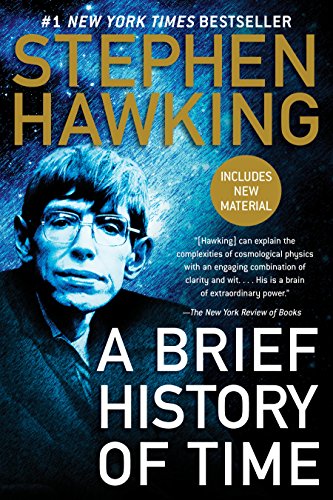
A Brief History Of Time – Stephen Hawking

stephen hawking book cover

The history of the universe told through the lens of science and physics

Stephen Hawking was a brilliant theoretical physicist who dedicated his career to studying and teaching physics. “A Brief History Of Time” is his most popular book, selling over 10 million copies and has been translated into more than 30 languages. It is a remarkable book because he is able to explain incredibly difficult concepts (quantum mechanics, general relativity, cosmology) in everyday language. It is written in a way that doesn’t require a physics degree to understand.

I’m not going to do a very long breakdown of the book, because it will be pretty clear from this short list of topics if you’ll be interested or not. But please don’t click away until you at least read my recommendation. Yes, this is a science book, but I feel that it is really important, even for folks who don’t work in scientific fields.

Topics Covered

The history of scientific discovery: the author traces the history of the study of astronomy, going back as far as the ancient Greek philosophers.

Gravity and Space/Time: how does gravity work and how is it related to time? Hawking dives into the implications of Einstein’s theories of general and special relativity and what this means on a universal scale.

Black holes: it just wouldn’t be complete if Dr Hawking didn’t talk about the topic that he’s most know for! This section of the book is my favorite part.

The beginning of the universe: how did the universe get started? What does this mean for the future and our history? There is a bit of speculation and philosophizing from the author here that is out of scope for the book, but worth considering.

The quantum world: Dr Hawking explains the strangeness of the smallest particles in the universe and the forces that control how they work together. It’s a really, really weird world that we live in.

Recommendation

I love this book. I’m fascinated with all things science, especially things like black holes, how the universe works, and the weirdness of the quantum world. You don’t have to be a nerd to appreciate this book, but it helps. It was a brave undertaking to try and write a book that explains some really deep stuff in layman’s terms. Some have criticized it for not being scientific enough. Others say it is still too technical for the average person to comprehend. You can’t please everyone!

The one thing I will note is that I’m not entirely certain how up-to-date all the information is in this book. There has been a flurry of recent research, scientific observation, and breaking news on topics like dark matter, the weight of the Higgs Boson particle, and gravitational waves. I’m not sure how much (if at all) such info might conflict with some of the theories that Dr Hawking provides in this book, but it is something to keep in mind. There is a newer book called A Briefer History of Time that is supposedly a bit more refined, abridged, and updated that was published in 2005 that you may want to check out first. I haven’t yet, so I can’t comment on it.

You can find the book on Amazon here. Here’s a link to the Wiki page on the book.

Their Eyes Were Watching God – Zora Neale Hurston

zora neale hurston their eyes book cover

A brilliant novel from an author you may not have heard of before

“Their Eyes Were Watching God”, now recognized as a classic, must-read novel, was originally poorly received and reviewed when it was published in the 1930s. It is a whirlwind that plunges you into what life was like in the early 1900s for people of color, especially women. I guess you could call it a type of “coming of age” novel, as it follows the life of Janie Crawford, the protagonist, as she grows up in the deep South.

Topics and Themes

Race issues: it is hard to miss the racial issues that Janie experiences, especially early in her life. While I would consider gender roles to be the most significant theme of the book, race and racism are portrayed in this novel, though not as thoroughly as To Kill A Mockingbird. Prejudice and racism are nasty things that continue to be embedded in America. Often times, we are not fully aware of how much they impact our culture.

Gender roles: Janie has complicated relationships throughout the book. Women experience many stereotypes and labels today, but even more so for a black woman in the first part of the 20th century. Women in the book are seen as objects and “less than”, not appreciated for what they bring to the relationship or marriage.

Cultural identity: the author uses dialog that contains the typical vernacular of people living in the deep South at that time. This was one of the reasons that the book wasn’t well-received by black (male) authors at the time it was written. It is likely that having a black woman protagonist was yet another reason for the lack of approval. Life in the South, cultural interaction, and social life is displayed throughout the book.

Recommendation

This novel captivated me right from the first page. It took me a little while to get in the flow with reading the dialog between characters. I can see where this could be a turn-off for some readers, especially those who aren’t familiar with the deep South dialect and way of speaking. The characters are well developed and messy around the edges, the story flows well, and I found myself along for the journey when reading this great novel. I can see why this book is often included in “best novels” lists, like the Top 100 post. Personally, I’d rank it much higher.

Link to the book on Amazon. Wiki link here.

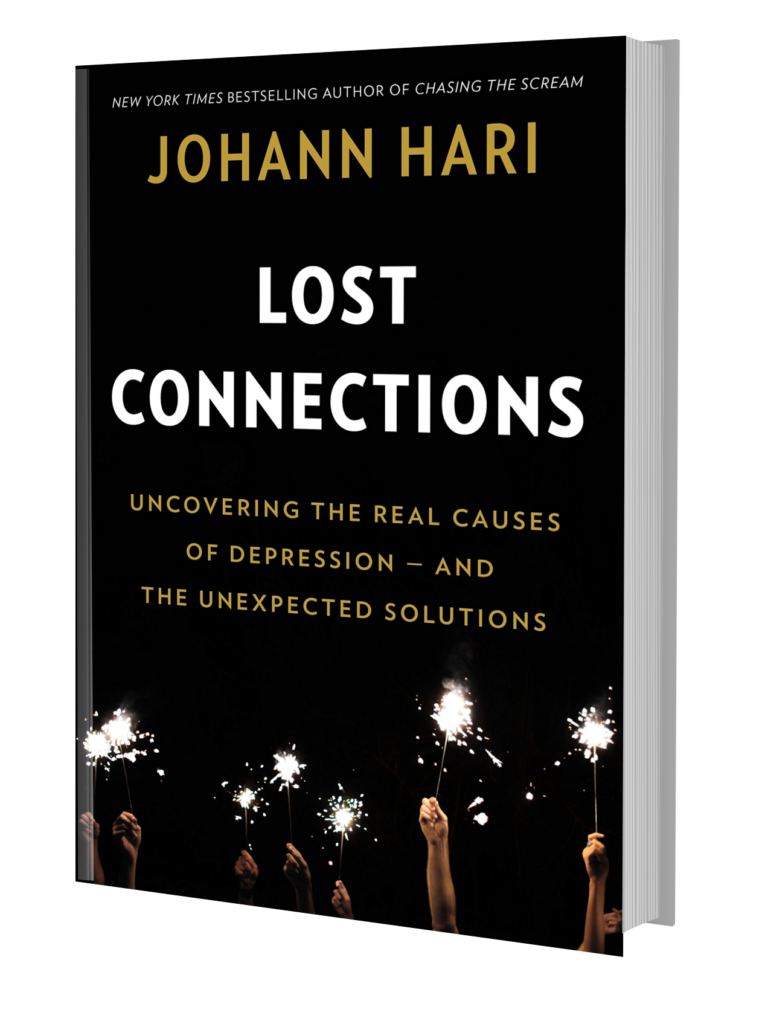
Lost Connections – Johann Hari

johann hari lost connections book cover

Social connections are more important than you think

This book is a look at the social and cultural factors that play into and can cause anxiety and depression. Written by a journalist who also has personally experienced depression, the author explores how it’s more than just biology that influences whether we have anxiety or depression. It’s a controversial book, for sure. I don’t necessarily agree with all of his conclusions, but he brings up things that are far too often overlooked, especially the mindset that a pill fixes everything.

Before I get into the usual review/breakdown, I want to add this link about a critical review of an article that Johann Hari released ahead of print of this book. While this critical review is based on the article Hari wrote, it also is applicable to the book. I recommend that people read that review before or after checking out this book.

Topics Covered

The “Chemical Imbalance” view of depression: the author does a good job of explaining how the view of depression and anxiety being solely a serotonin problem gained traction and became part of the public (mis)understanding of how these conditions work. Yes, SSRIs help people, but not in the ways that psychiatrists originally thought. Serotonin is a chemical that does and is involved in a lot of brain/body issues. Medical professionals are more aware of this than Mr Hari lets on, but the public is still largely misinformed about this topic.

Social factors of depression and anxiety: the excessive focus on biology and chemical imbalances have largely pushed discussion on social factors of mental illness out of the picture. Our modern, Western lifestyle runs contrary to many of the ways that humans have lived and socialized for thousands of years. We shouldn’t overlook this. This is part of what is called social determinants of health (often abbreviated as SDOH). You can find out more about SDOH via this link from the CDC.

Loneliness: many studies and statistics show that people are more lonely than ever, despite living in the internet age of constant connection. This is part of the SDOH as mentioned above, but deserves to be singled out as a primary, concerning issue. Connection is so very important for us humans. We are a social species, after all. We need personal, face to face interaction with others to be healthy in mind and body. I’ve written a post about this topic on another blog for those interested in learning more.

Recommendation

While I don’t agree with all the conclusions that Hari makes, or how he frames some of the book, I appreciate that he was willing to share his story and what he’s learned along the way. He makes several great points about how social factors are often overlooked, issues such as SDOH, and rightly critiquing the overprescription of meds. I would recommend this book to anyone wanting to know more about those specific parts of the discussion on depression and anxiety.

The main caution I want to make with this recommendation is that people should do more research into this topic before making permanent decisions on medical care, medication usage, and such (for themselves and for how they view others). Please read the critical review I linked to at the top of this post if you’re going to read this book.

You can find the book on Amazon here. Here’s a link to the website for the book.

1984 – George Orwell

george orwell 1984 novel

A dystopian novel about a future where Big Brother is always watching

Nineteen Eighty-Four, published in 1949 by the author George Orwell, is possibly the definitive dystopian novel. It is a classic, iconic work of literature and many of the words and phrases that Orwell created in this book have become part of our language. If a government or organization is referred to as Orwellian, it means that the thing is sinister, deceptive, manipulative, authoritarian, and/or totalitarian. 1984 is often compared to Brave New World, which was published 17 years earlier.

Themes

Government Surveillance – “Big Brother is Watching” posters are everywhere, but it isn’t just a show for intimidation, it’s a fact for those in the Party. The issues and concerns about privacy and government intrusion are even more pressing in our day with the controversial NSA surveillance of citizens.

Authoritarianism – Orwell takes what he’s learned about dictatorships and authoritarian governments, from the fascism of Nazi Germany to the communism of Soviet Russia, and imagines what those could become in the future with the benefit of advanced technology. He shows how authoritarian and totalitarian governments are strikingly similar, even though they may technically come from opposite ideological sides of the political spectrum. The goal is still the same – power and control.

Social Class Hierarchy – The population in the novel is divided into 3 categories and it is explained later in the novel how this structure has been fairly consistent throughout human history since the agricultural revolution. Class struggles are discussed and implied throughout the book.
1. The Inner Party: the elite, comprising a very small percentage of the population
2. The Outer Party: a larger group that encompasses the rest of the official political party members, but still small compared to the overall population (approx 10-15%)
3. The Proletariat: the rest of the population (approx 85%), largely uneducated and often ignored by the Party. Usually referred to as “proles.”

Newspeak – A language created by the Party with the purpose of simplifying and condensing the English language in such a way as to promote their ideology and control. The media is tightly controlled by the party and is filled with propaganda. The Party works around the clock at editing and rewriting history, employing newspeak terms like “doublethink” to distort reality and maintain control over the population.

Recommendation

In many ways, I prefer this book over Brave New World. While BNW is more of a satire or parody, 1984 is much more detailed and developed in its plot and characters. 1984 is darker and haunting (even creepy). Orwell is a first-class writer and I think if you enjoy dystopian novels, you’ll really appreciate this book. This is an important book to read, both for enlightenment and as a cautionary tale of how power corrupts people and governments.

You can find the book on Amazon here. Here’s a link to the Wiki page for this book.

Good to Great: Why Some Companies Make the Leap…and Others Don’t – Jim Collins

Good to great book cover Jim Collins

Lessons from companies who made the transition from good to great

Great companies, in terms of sales, revenue, and stock returns are easy to identify. Every once in a while a company will jump up, seemingly out of the blue, and captivate the business world, only to crash and burn or return to average after a short time. A few companies, however, have been able to make a transition from good/average (or even below average) to great. This book is an analysis of 11 companies that made this transition and goes into detail about the things that each company did or had in common when they made the jump.

Not your average business book

I don’t read many books on business, sales, or marketing. It’s not really an area of interest for me. But this book came highly recommended from someone so I thought I’d give it a try. I’m glad I did, because while I’m not interested in becoming a corporate executive, there are quite a few lessons that you can draw out of this book that are applicable to just about everyone.

In case you’re wondering what benchmarks the author and his research team used to define a good to great company, this is it: a company who performed roughly at average on their stock market price for at least 10 years, followed by 15 years of sustained growth that resulted in posting returns 3 times greater than those in their industry and in the general market. Pretty hard standards and parameters to reach, which is why only 11 companies met them out of the thousands available.

Important note: This book was written in 1999 and published in 2000, so the data is from the decades leading up to the year 2000. Keep that in mind while reading.

Themes/Topics

The Hedgehog Concept – a simple, clear concept that flows from a deep understanding of the way the following three areas intersect:

  1. What can you be the best in the world at?
  2. What drives your economic engine?
  3. What are you deeply passionate about?

In other words, think about what you can truly be the best at in your area, region, niche. Conversely, think about what you cannot be the best at and use both of these as a discerning guide to direct your company (and your career). Figure out what you can do to provide for your financial needs. Last, but not least, think about what you’re passionate about. It’s difficult to stay focused and be successful in a business or career if you don’t care about what you’re doing. Where these things intersect/overlap is the sweet spot of the Hedgehog concept. Stick with this and brush off the rest.

Level 5 Leadership – interestingly, the top level leadership showed similar characteristics in the good to great companies. There seems to be a collection of personality traits that makes for a very successful leader, though these traits are quite different than the image most of us have of what a successful CEO looks like. Here’s a list of those traits and comparisons.

  • Humble – willing to accept personal responsibility for the company’s failures and also quick to give credit to the team for any successes. Team>me. Compelling modesty.
  • Quiet, hardworking, obsessively focused and dedicated – leads by example
  • Operates by the “Stockdale paradox” – consistent faith that they will succeed (optimism) while still wanting to face the brutal facts of reality (realistic).
  • Consistent and steady, but willing to embrace change if it can help fulfill the long term goals. Not interested in fads and/or technology, unless the technology can help them focus on their goals/Hedgehog Concept.
  • Not just “get the right people on the bus” but “get the right people in the right positions on the bus” mentality.
  • “First who, then what” – find the best people to hire, then find the best fit for those people. No compromises in that regard. Trim out those who aren’t the right people immediately.
  • Seek quiet understanding, not bravado. Charismatic leaders often are level 4 and why companies often can’t sustain success, because it’s all about the leader, not the culture of the company.
  • Fanatically driven by the need to produce results. Not afraid to make hard decisions.
  • Don’t let their egos get in the way – Humble and fearless – they don’t need to be the Alpha male or biggest dog in the company. Their leadership style often cuts against the grain of the belief that larger than life CEOs are what’s needed to transform companies.
  • Usually come from within the company – understand the culture but also understand what isn’t working and what needs to change to become great.

Importance of Discipline – great companies have a culture of discipline built in. Some leaders are able to instill discipline through a heavy-handed, tyrannical approach, but that is unsustainable and usually backfires eventually. To build a culture of discipline requires a deep understanding that if you have the right people in the right positions on the bus, then you don’t need to resort to the common external motivation methods that many companies use. Great companies (and leaders) avoid bureaucracy and hierarchy and instead create a culture of discipline. Internally motivated people don’t need to be “managed” and meetings become far less important or necessary. Creativity suffers under heavy management and so does productivity. Self-disciplined employees don’t need micromanaging, they run from it.

Recommendation

This was a bit longer of a review than I normally do, but I thought it was important to show that the lessons in this book are more than just “how to increase your corporate earnings.” Many of the ideas and lessons can be applied on a personal level – how to be a good leader, how to have a meaningful career, how to make the most out of life. In the end, it was because of these factors that I decided to include Good to Great in this blog and give it the “recommended” stamp of approval.

You can find the book on Amazon here.
Top 100 Reading List – from Joel Patrick

The “Ultimate List” of books you should read before you die

If you’re looking for ideas on fiction novels to read, you can start by going through this fantastic compilation on Medium called “100 Books to Read before You Die: Creating the Ultimate List.” The author of that post, Joel Patrick, did some significant work analyzing multiple “Top 100” lists by various organizations. Do yourself a favor and check it out. I’m going to only list the books and authors here, but not the rest. I don’t want to plagerize, only to use it for comparison purposes since this blog has already reviewed some of the books included in this list (and will have reviews coming soon on books that are in this list). Please visit the article above and check out the author’s notes on each book.

The Ultimate List: 100 Books to Read before You Die

Again, here’s the link to the article that put together this list – https://medium.com/world-literature/creating-the-ultimate-list-100-books-to-read-before-you-die-45f1b722b2e5

  1. The Great Gatsby by F. Scott Fitzgerald
  2. Catch-22 by Joseph Heller
  3. On the Road by Jack Kerouac
  4. To Kill A Mockingbird by Harper Lee
  5. The Lord Of The Rings by J. R. R. Tolkien
  6. Lolita by Vladimir Nabokov
  7. The Catcher in the Rye by JD Salinger
  8. Midnight’s Children by Salman Rushdie
  9. Alice’s Adventures In Wonderland by Lewis Carroll
  10. Ulysses by James Joyce
  11. Lord of the Flies by William Golding
  12. The Grapes Of Wrath by John Steinbeck
  13. 1984 by George Orwell
  14. Jane Eyre by Charlotte Brontë
  15. Moby-Dick by Herman Melville
  16. Mrs. Dalloway by Virginia Woolf
  17. A Passage to India by EM Forster
  18. Brave New World by Aldous Huxley
  19. Things Fall Apart by Chinua Achebe
  20. The Prime of Miss Jean Brodie by Muriel Spark
  21. One Hundred Years of Solitude by Gabriel García Márquez
  22. Pride and Prejudice by Jane Austen
  23. Animal Farm by George Orwell
  24. Crime And Punishment by Fyodor Dostoyevsky
  25. Beloved by Toni Morrison
  26. Invisible Man by Ralph Ellison
  27. Slaughterhouse-Five by Kurt Vonnegut
  28. The Stranger by Albert Camus
  29. Don Quixote by Miguel De Cervantes
  30. Robinson Crusoe by Daniel Defoe
  31. Frankenstein by Mary Shelley
  32. The Count of Monte Cristo by Alexandre Dumas
  33. David Copperfield by Charles Dickens
  34. Wuthering Heights by Emily Brontë
  35. Little Women by Louisa M Alcott
  36. The Call of the Wild by Jack London
  37. The Wind in the Willows by Kenneth Grahame
  38. Scoop by Evelyn Waugh
  39. The Big Sleep by Raymond Chandler
  40. Lucky Jim by Kingsley Amis
  41. If on a Winter’s Night a Traveller by Italo Calvino
  42. A Bend in the River by V. S. Naipaul
  43. Housekeeping by Marilynne Robinson
  44. Atonement by Ian McEwan
  45. His Dark Materials by Philip Pullman
  46. The Hitchhiker’s Guide to the Galaxy by Douglas Adams
  47. Great Expectations by Charles Dickens
  48. Middlemarch by George Eliot
  49. Brideshead Revisited by Evelyn Waugh
  50. Anna Karenina by Leo Tolstoy
  51. Portnoy’s Complaint by Philip Roth
  52. The Age of Innocence by Edith Wharton
  53. The Handmaid’s Tale by Margaret Atwood
  54. The Sun Also Rises by Ernest Hemingway
  55. To the Lighthouse by Virginia Woolf
  56. White Noise by Don DeLillo
  57. The Heart Is a Lonely Hunter by Carson McCullers
  58. The Sound and the Fury by William Faulkner
  59. Pale Fire by Vladimir Nabokov
  60. I, Claudius by Robert Graves
  61. Go Tell It On The Mountain by James Baldwin
  62. A Dance to The Music of Time by Anthony Powell
  63. Tropic of Cancer by Henry Miller
  64. Wide Sargasso Sea by Jean Rhys
  65. Under The Net by Iris Murdoch
  66. Gulliver’s Travels by Jonathan Swift
  67. Tom Jones by Henry Fielding
  68. Clarissa by Samuel Richardson
  69. Tristram Shandy by Laurence Sterne
  70. The Scarlet Letter by Nathaniel Hawthorne
  71. Madame Bovary by Gustave Flaubert
  72. The Portrait of a Lady by Henry James
  73. The Strange Case of Dr Jekyll and Mr Hyde by Robert Louis Stevenson
  74. Nostromo by Joseph Conrad
  75. In Search of Lost Time by Marcel Proust
  76. The Rainbow by D. H. Lawrence
  77. The Good Soldier by Ford Madox Ford
  78. The Trial by Franz Kafka
  79. As I Lay Dying by William Faulkner
  80. Charlotte’s Web by E. B. White
  81. The Tin Drum by Gunter Grass
  82. Herzog by Saul Bellow
  83. Tinker Tailor Soldier Spy by John Le Carré
  84. Song of Solomon by Toni Morrison
  85. Money by Martin Amis
  86. Oscar And Lucinda by Peter Carey
  87. Haroun and the Sea of Stories by Salman Rushdie
  88. American Pastoral by Philip Roth
  89. Austerlitz by W. G. Sebald
  90. A Wrinkle in Time by Madeleine L’Engle
  91. Are You There, God? It’s me, Margaret by Judy Blume
  92. Of Human Bondage by W. Somerset Maugham
  93. The Amazing Adventures of Kavalier and Clay by Michael Chabon
  94. The Brief Wondrous Life of Oscar Wao by Junot Diaz
  95. The Corrections by Jonathan Franzen
  96. The Phantom Tollbooth by Norton Juster
  97. The Wind-Up Bird Chronicle by Haruki Murakami
  98. Their Eyes Were Watching God by Zora Neale Hurston
  99. Watchmen by Alan Moore
  100. The Unbearable Lightness of Being by Milan Kundera

Closing Thoughts

I’ve had quite a few of these on my wish list for some time now. Some I have read, like Ulysses by James Joyce, that I didn’t particularly enjoy and therefore won’t review on this blog. Some, like On The Road by Jack Kerouac, were okay, but they didn’t really click with me personally and I don’t know if I’d recommend/think that people should read them. Others, I have read but have yet to complete a review on them. I’m very thankful to Joel Patrick for putting this list together. I’ll definitely be using it for selecting future fiction books for my personal reading.

Is there a book on here that surprises you? What’s your favorite from this list?