Posts

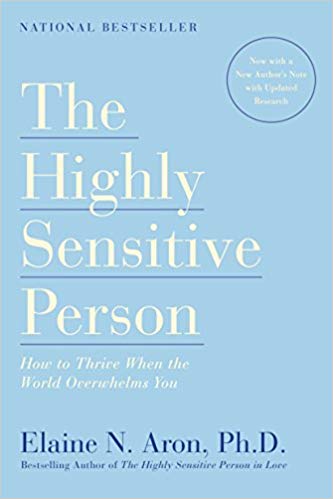
The Highly Sensitive Person: How To Thrive When The World Overwhelms You – Elaine N. Aron, Ph.D.

elaine aron highly sensitive person book cover

An explanation of sensory processing sensitivity, a temperament/personality trait

In this book, Dr Aron identifies and explains what sensory processing sensitivity (a highly sensitive person) means and what it looks like in the people who have this trait. Highly sensitive people (HSPs) are easily overstimulated and often misunderstood in our current culture that idealizes extroversion and constant stimulation. According to the author, HSPs comprise approximately 15-20% of the population. Could you or someone you know be included in this?

From the author’s website:

  • Are you easily overwhelmed by such things as bright lights, strong smells, coarse fabrics, or sirens nearby?
  • Do you get rattled when you have a lot to do in a short amount of time?
  • Do you make a point of avoiding violent movies and TV shows?
  • Do you need to withdraw during busy days, into bed or a darkened room or some other place where you can have privacy and relief from the situation?
  • Do you make it a high priority to arrange your life to avoid upsetting or overwhelming situations?
  • Do you notice or enjoy delicate or fine scents, tastes, sounds, or works of art?
  • Do you have a rich and complex inner life?
  • When you were a child, did your parents or teachers see you as sensitive or shy?

There is a self-test available on her website for those who answered yes to many/most of the above question.

Topics Covered

Introversion vs sensitivity – Dr Aron talks about the differences of introversion and high sensitivity. They are not the same thing, though there are areas where they can seemingly overlap. Extroverts can be highly sensitive, for example.

Response to stimulation – HSPs are very sensitive to stimulation. This often means that they quickly get tired in high stimulation environments (like a group gathering in a crowded restaurant with music playing and many people talking at once) a need to get away to recharge. Stimulation can come from any of the senses, but especially through sights and sounds.

Highly sensitive people feel like outcasts – A common feeling among HSPs is that they are fatally flawed. They have a trait that isn’t appreciated in our modern age, even looked down upon. They often avoid high stimulation group activities due to their trait and can end up as loners because of this.

Benefits of high sensitivity – HSPs can greatly benefit from this trait in creative and artistic professions. They tend to be highly intuitive and empathetic. While this can cause trouble in some careers and relationships, in the right setting it can be a fantastic gift.

Practical wisdom for HSPs – This isn’t just a theoretical or abstract book, it is full of practical wisdom and therapy/counseling activities that you can do to help identify the problem areas in life and what you can do about it. Each chapter ends with follow up questions and thing you can talk about with your counselor or therapist if you decide to seek professional help for any issues related to this.

Recommendation

I really enjoyed this book. Partly because I identify as an HSP and I have HSPs in my family. It really helps to explain personality and temperament beyond the typical, stereotypical definitions of introversion. This book could also be really helpful for people who don’t have this trait but have a loved one or family member who does. It’s easy to misinterpret the actions of someone without understanding what is going on inside them. Once you have a better understanding, it can help decrease resentment and hard feelings. I also recommend it for people who work in the service industry, especially healthcare. If 1/5th of your clients/patients have this trait, you really should learn more about it and how you can best connect with them.

Find out more about the book on Dr Aron’s website. Here’s the Wiki link to learn more about sensory processing sensitivity.

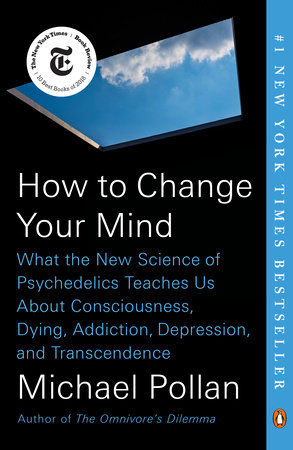
How to Change Your Mind – Michael Pollan

Michael Pollan How to Change Your Mind book cover

What the New Science of Psychedelics Teaches Us About Consciousness, Dying, Addiction, Depression, and Transcendence

In this book, journalist Michael Pollan explains the history, science, and research of psychedelics as well as his own personal experiences. It is part science book and part personal journey/memoir. Pollan clearly has his biases when it comes to spiritual and mystical matters, but he does his best to set these aside (along with his neurotic tendencies) in exploring new ideas. This following quote from his website sums it up well:

But what I didn’t expect when I embarked on this journey was for it to result in what is surely the most personal book I’ve ever written. I like to immerse myself in whatever subject I’m reporting—whether that means buying a steer to understand the meat industry or apprenticing myself to a baker to understand bread. What began as a third-person journalistic inquiry ended up a first-person quest to learn what these medicines had to teach me about not only the mind but also my mind, and specifically about the nature of spiritual experience. This book has taken me places I’ve never been—indeed, places I didn’t know existed.

Michael Pollan – website

Topics

The cultural history of psychedelic substances – Many cultures throughout history have incorporated psychedelics into aspects of religious life and spiritual practices. Mr Pollan traces the history of some of these in various indigenous cultures.

Early scientific research on psychedelics – The history of LSD and the promising research on it for treating mental health conditions, substance abuse, and more in the 1950s and 1960s.

Countercultural revolution and the fallout – Timothy Leary and the culture wars are discussed and how this lead to political fallout and the abandonment of research on LSD and other psychedelic substances.

Transcendent experiences – The author explains the renewed interest and research on psychedelics and his own experiences under the influence. This is where the book shifts a bit from strictly science journalism into a more memoir-style.

Recommendation

I really liked this book. It will likely inform and challenge you. The author clearly has his own biases about spiritual and mystical matters, but he’s willing to explore areas that he once completely neglected. I give him major credit for that. He’s also a talented writer, so it’s not a difficult read or overly scientific. It’s definitely appropriate for the Eclectic Reading List.

You can learn more about the author and this book on his website. Here’s a link to the Wiki page for this book. Below is a video from a presentation at Google about his book and the topic of psychedelics.

Featured image from Penguin Random House.

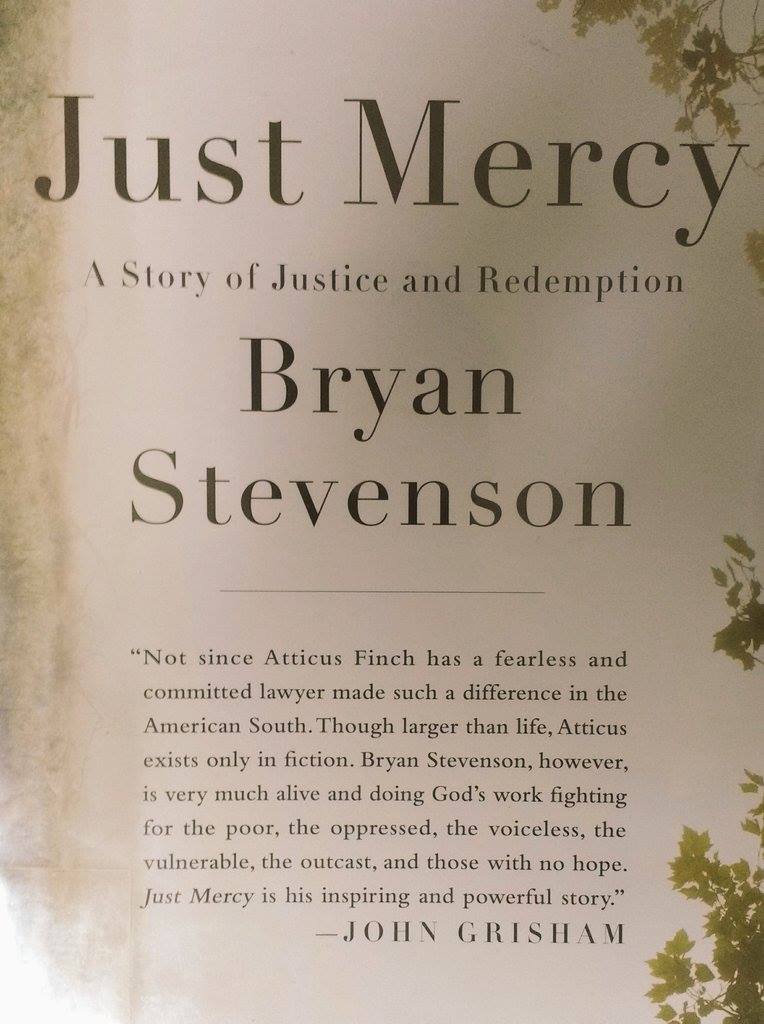
Just Mercy: A Story of Justice and Redemption – Bryan Stevenson

just mercy bryan stevenson book cover

A bold and brave look at injustice and racism in America

How committed are we to justice in America? Are we consistent with this commitment to justice, or are some groups given preferential treatment while others are discriminated against? Bryan Stevenson is a lawyer who founded the Equal Justice Initiative and has occasionally been in the headlines over the years for his work in defending people of color on death row. “Just Mercy” addresses the inconsistencies we have in our judicial system and looks at ways to make things better.

The true measure of our character is how we treat the poor, the disfavored, the accused, the incarcerated, and the condemned.

We are all implicated when we allow other people to be mistreated.

Bryan Stevenson, Just Mercy

Themes

Injustice in our judicial system – There’s no ignoring the statistics. Black men are significantly more likely to be arrested and imprisoned than white men, even when you factor in the same crimes. Black men are also sentenced to the death penalty far more often. This isn’t just some artifact from our country’s white supremacist past, this is current-day America.

American incarceration – The United States has the highest rate of incarceration in the world. Does this mean we have more lawless people or are the laws themselves (and how they are enforced) the real issue? I think it’s pretty obvious that the latter is the case.

The death penalty – Since the science has finally arrived with DNA evidence, many people who were wrongfully sentenced to death row have been exonerated. The author makes a great point about the morality surrounding this question – “The death penalty is not about whether people deserve to die for the crimes they commit. The real question of capital punishment in this country is, Do we deserve to kill?”

Recommendation

I can’t recommend this book enough. It is very well done, but it is also incredibly sad. My heart breaks to think of how many people have unjustly suffered under the cruel judicial system we have here in the USA. It can be easy to turn a blind eye to statistics, but when you take a moment to hear the stories and the people who have suffered, you can’t look away and pretend you didn’t hear. I suppose you can try, but you’d only be deceiving yourself.

You can find Just Mercy on Amazon here. You can learn more about the book on the EJI website. The book is being made into a movie – more on that here.

The Left Hand Of Darkness – Ursula K. Le Guin

ursula le guin left hand of darkness book cover

A Sci-Fi epic that challenges how you look at humanity

This novel is a wild mix of science fiction and fantasy that took me along for an interesting journey. It is complex, contains action and adventure, and does a fascinating job of showing how tricky it can be when trying to communicate across cultures. If you can get a newer edition and read the author’s introduction, you might find that alone to be worth getting the book (I thoroughly enjoyed it!). The Left Hand Of Darkness won two “Best Novel” awards in 1970 – the Nebula Award (determined by the Science Fiction Writers of America) and the Hugo Award (determined by science fiction fans).

Themes

Gender – Without giving too much away, I’ll say that this book presents gender in a unique way that will challenge many readers to think differently. What would a society look like where gender was eliminated? The author presents such a society and takes you on a journey.

Cross-cultural communication – Communicating with others isn’t an easy task, especially when you don’t understand the way that culture influences communication. This becomes even more difficult when you take in nonverbal communication and other subtleties. Faulty assumptions and misunderstandings are bound to happen in such scenarios.

Prejudice – The protagonist faces prejudice and shows prejudice on how he interacts with the people he is supposed to communicate with. He is flawed in many ways and this helps to illustrate the problems associated with prejudice.

Recommendation

This is a great science fiction novel. But it’s more than that. It’s great at character development, addressing issues in a unique way, and challenging the reader to re-examine how they think/look at the world. I really enjoyed this book and highly recommend it. If you have read and enjoyed Dune, please give this one a shot. Even if you don’t normally like sci-fi, I think you might love this book. As I mentioned earlier, the author introduction alone was worth it for me.

Link to the book on Amazon. Wiki link here.

Turtles All the Way Down – John Green

turtles all the way down book cover john green

A young adult novel about life, love, and living with mental illness

You might be tempted to skip over this book because it is classified as a “young adult” novel. Please take a moment to let me explain not only why I really love this book, but also why I think it is an important book to read. The world is overflowing with young adult coming of age novels that are filled with cliches, cheesy teen romances, and neat, happy endings – this isn’t one of those books.

Aza, the protagonist, struggles with obsessive-compulsive disorder and anxiety. The author does a fantastic job of taking you on a journey to help you see and feel what it is like to live with a mental illness. It is a very personal and vulnerable book, as well as a good story. Consider this quote from a review of the book:

“In an age where troubling events happen almost weekly, this deeply empathetic novel about learning to live with demons and love one’s imperfect self is timely and important.”

Publishers Weekly

Themes

Mental illness – the main character struggles with intrusive thoughts and compulsive actions. She knows the obsessions and compulsions are irrational, but has difficulty controlling them.

The self – who are you at your core? What makes you, you? These questions are asked again and again by different characters in different ways.

Grief – characters in the book deal with grief in different ways. Some are more socially acceptable and healthier than others.

Recommendation

I love this book. I can relate to it. If you know someone who struggles with mental illness, maybe this book will help you to have a better understanding of what it feels like to be in their shoes. Maybe you are the one who struggles and this book will help you to feel like you’re not alone in the world. The characters are rough around the edges, the relationships complicated, and the pain and grief are real. And I love it for that.

Learn more about the author and this book on his website. Here’s the Wiki link to this book.

Lastly, if you are struggling with mental illness and/or mental health issues, please know that help and hope are possible. Here are some resources:

Suicide Prevention Lifeline: get help right now by calling 800-273-8255

National Alliance on Mental Illness: find support groups and helpful info

To Write Love On Her Arms: finding hope and help through story sharing

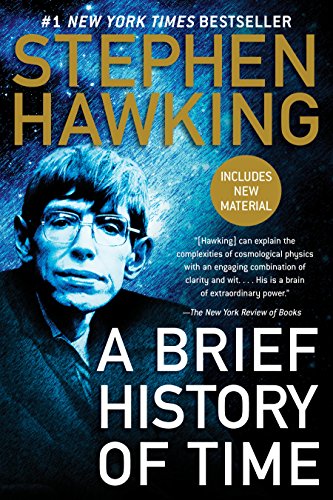
A Brief History Of Time – Stephen Hawking

stephen hawking book cover

The history of the universe told through the lens of science and physics

Stephen Hawking was a brilliant theoretical physicist who dedicated his career to studying and teaching physics. “A Brief History Of Time” is his most popular book, selling over 10 million copies and has been translated into more than 30 languages. It is a remarkable book because he is able to explain incredibly difficult concepts (quantum mechanics, general relativity, cosmology) in everyday language. It is written in a way that doesn’t require a physics degree to understand.

I’m not going to do a very long breakdown of the book, because it will be pretty clear from this short list of topics if you’ll be interested or not. But please don’t click away until you at least read my recommendation. Yes, this is a science book, but I feel that it is really important, even for folks who don’t work in scientific fields.

Topics Covered

The history of scientific discovery: the author traces the history of the study of astronomy, going back as far as the ancient Greek philosophers.

Gravity and Space/Time: how does gravity work and how is it related to time? Hawking dives into the implications of Einstein’s theories of general and special relativity and what this means on a universal scale.

Black holes: it just wouldn’t be complete if Dr Hawking didn’t talk about the topic that he’s most know for! This section of the book is my favorite part.

The beginning of the universe: how did the universe get started? What does this mean for the future and our history? There is a bit of speculation and philosophizing from the author here that is out of scope for the book, but worth considering.

The quantum world: Dr Hawking explains the strangeness of the smallest particles in the universe and the forces that control how they work together. It’s a really, really weird world that we live in.

Recommendation

I love this book. I’m fascinated with all things science, especially things like black holes, how the universe works, and the weirdness of the quantum world. You don’t have to be a nerd to appreciate this book, but it helps. It was a brave undertaking to try and write a book that explains some really deep stuff in layman’s terms. Some have criticized it for not being scientific enough. Others say it is still too technical for the average person to comprehend. You can’t please everyone!

The one thing I will note is that I’m not entirely certain how up-to-date all the information is in this book. There has been a flurry of recent research, scientific observation, and breaking news on topics like dark matter, the weight of the Higgs Boson particle, and gravitational waves. I’m not sure how much (if at all) such info might conflict with some of the theories that Dr Hawking provides in this book, but it is something to keep in mind. There is a newer book called A Briefer History of Time that is supposedly a bit more refined, abridged, and updated that was published in 2005 that you may want to check out first. I haven’t yet, so I can’t comment on it.

You can find the book on Amazon here. Here’s a link to the Wiki page on the book.

Their Eyes Were Watching God – Zora Neale Hurston

zora neale hurston their eyes book cover

A brilliant novel from an author you may not have heard of before

“Their Eyes Were Watching God”, now recognized as a classic, must-read novel, was originally poorly received and reviewed when it was published in the 1930s. It is a whirlwind that plunges you into what life was like in the early 1900s for people of color, especially women. I guess you could call it a type of “coming of age” novel, as it follows the life of Janie Crawford, the protagonist, as she grows up in the deep South.

Topics and Themes

Race issues: it is hard to miss the racial issues that Janie experiences, especially early in her life. While I would consider gender roles to be the most significant theme of the book, race and racism are portrayed in this novel, though not as thoroughly as To Kill A Mockingbird. Prejudice and racism are nasty things that continue to be embedded in America. Often times, we are not fully aware of how much they impact our culture.

Gender roles: Janie has complicated relationships throughout the book. Women experience many stereotypes and labels today, but even more so for a black woman in the first part of the 20th century. Women in the book are seen as objects and “less than”, not appreciated for what they bring to the relationship or marriage.

Cultural identity: the author uses dialog that contains the typical vernacular of people living in the deep South at that time. This was one of the reasons that the book wasn’t well-received by black (male) authors at the time it was written. It is likely that having a black woman protagonist was yet another reason for the lack of approval. Life in the South, cultural interaction, and social life is displayed throughout the book.

Recommendation

This novel captivated me right from the first page. It took me a little while to get in the flow with reading the dialog between characters. I can see where this could be a turn-off for some readers, especially those who aren’t familiar with the deep South dialect and way of speaking. The characters are well developed and messy around the edges, the story flows well, and I found myself along for the journey when reading this great novel. I can see why this book is often included in “best novels” lists, like the Top 100 post. Personally, I’d rank it much higher.

Link to the book on Amazon. Wiki link here.

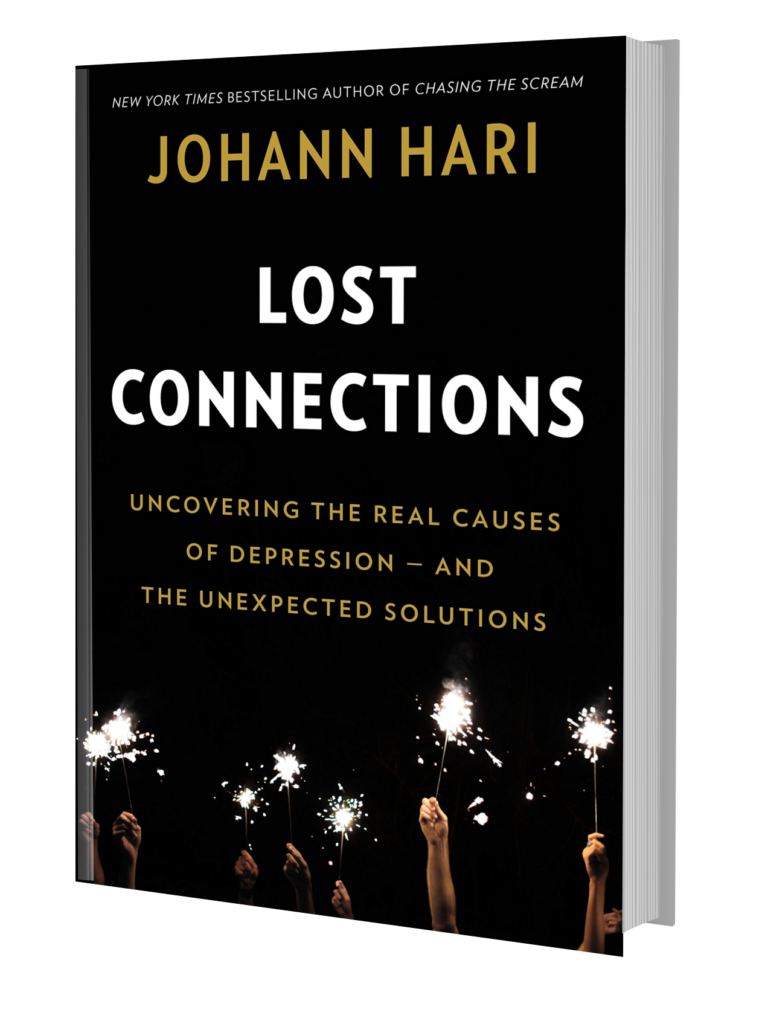
Lost Connections – Johann Hari

johann hari lost connections book cover

Social connections are more important than you think

This book is a look at the social and cultural factors that play into and can cause anxiety and depression. Written by a journalist who also has personally experienced depression, the author explores how it’s more than just biology that influences whether we have anxiety or depression. It’s a controversial book, for sure. I don’t necessarily agree with all of his conclusions, but he brings up things that are far too often overlooked, especially the mindset that a pill fixes everything.

Before I get into the usual review/breakdown, I want to add this link about a critical review of an article that Johann Hari released ahead of print of this book. While this critical review is based on the article Hari wrote, it also is applicable to the book. I recommend that people read that review before or after checking out this book.

Topics Covered

The “Chemical Imbalance” view of depression: the author does a good job of explaining how the view of depression and anxiety being solely a serotonin problem gained traction and became part of the public (mis)understanding of how these conditions work. Yes, SSRIs help people, but not in the ways that psychiatrists originally thought. Serotonin is a chemical that does and is involved in a lot of brain/body issues. Medical professionals are more aware of this than Mr Hari lets on, but the public is still largely misinformed about this topic.

Social factors of depression and anxiety: the excessive focus on biology and chemical imbalances have largely pushed discussion on social factors of mental illness out of the picture. Our modern, Western lifestyle runs contrary to many of the ways that humans have lived and socialized for thousands of years. We shouldn’t overlook this. This is part of what is called social determinants of health (often abbreviated as SDOH). You can find out more about SDOH via this link from the CDC.

Loneliness: many studies and statistics show that people are more lonely than ever, despite living in the internet age of constant connection. This is part of the SDOH as mentioned above, but deserves to be singled out as a primary, concerning issue. Connection is so very important for us humans. We are a social species, after all. We need personal, face to face interaction with others to be healthy in mind and body. I’ve written a post about this topic on another blog for those interested in learning more.

Recommendation

While I don’t agree with all the conclusions that Hari makes, or how he frames some of the book, I appreciate that he was willing to share his story and what he’s learned along the way. He makes several great points about how social factors are often overlooked, issues such as SDOH, and rightly critiquing the overprescription of meds. I would recommend this book to anyone wanting to know more about those specific parts of the discussion on depression and anxiety.

The main caution I want to make with this recommendation is that people should do more research into this topic before making permanent decisions on medical care, medication usage, and such (for themselves and for how they view others). Please read the critical review I linked to at the top of this post if you’re going to read this book.

You can find the book on Amazon here. Here’s a link to the website for the book.

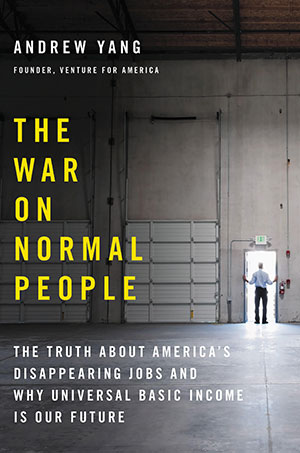
The War On Normal People – Andrew Yang

andrew yang war book cover

Guest post today from Aaron Eischeid
yangwar

Source: Public Library

Why I Picked It

The author, Andrew Yang, is currently seeking the nomination to be the democratic presidential candidate, and his distinguishing policy position is to implement a form of Universal Basic Income (UBI). I have been previously interested in UBI as a potential solution for poverty and subsequently many of poverty’s second and third order effects like addiction, abuse, depression, obesity etc. I am very glad that discussion around UBI is happening on a national stage, and wanted to learn more about Yang, and his plans specifically.

Idealistically speaking, I think UBI or a national dividend (same idea different marketing term) may be a rather good way to balance out some of the inherent injustices and inequalities of the system we are currently in. Ultimately UBI is a wealth redistribution scheme, but it stands out in that while other social welfare programs or wealth redistribution schemes tend to be heavy on bureaucracy, one of the appeals of UBI is how simple it is and how much existing bureaucracy it could stand to eliminate over time.

Not An Economics Textbook

This book obviously isn’t meant to be an academic work. Most of his intended audience would probably lose interest if it were. It is a book written by a presidential candidate, after all. In interviews, Yang has referred to UBI (or his particular nomenclature for it – the Freedom Dividend) as “capitalism that doesn’t start at zero” or “trickle up economics”. The latter phrase resonates with me much more than the former, but economics experts may cringe at both. I don’t know.

His writing and speaking style reflects that Yang is a venture capitalist / entrepreneur type more than an intellectual. As such he approaches the idea of UBI in a different way than I have tended to think about it. Where I tend to start from “seems like kind of the right thing to do”, and see the numerous pragmatics as icing; he seems to start from practical necessity – stemming from the rise of automation and the subsequent loss in jobs – and his cherry on top is the idealistic concept that “we’re all really shareholders in the wealthiest nation on the planet” (this is me sort of paraphrasing – not a direct quote).

He is not alone. Many people from the CEO or entrepreneurship side of the economy see the coming wave of job loss, and have latched onto the concept of UBI as good potential solution for the problems that will inevitably arise if the current mentality around jobs doesn’t shift significantly. Or similar business minded folk point out there is a solid case to be made that the socio-economic benefit of UBI is just a good deal. UBI isn’t cheap, but they argue it is an incredible bang for the buck in its potential to move the needle on costly budget items like crime, health care, education, and so on.

Themes and Concepts Covered

They Took Our Jobs!

they-terk-err-jerbs

Most of the first two thirds of the book outlines the problem in the US economy related to jobs.

First, a couple chapters are spent trying to convince us that a coming wave of automation and subsequent job loss is immanent. I tend to think some of the hype around AI is more fiction than science, but whether we have fully automated fleets of semi trucks or just mostly assisted driving, I do think Yang is almost certainly correct that there are about to be a whole lot less of certain kinds of work in the not so distant future, and as a society we aren’t really well prepared for that shift.

He does a nice job outlining that this isn’t only a problem for truck drivers and fast food cashiers, but really for anyone with repetitive task types of jobs. This can involve relatively non-specialized skills like call center employees. It can also impact highly trained professions like x-ray technicians, stock traders, and even surgeons.

A good chunk of pages are spent explaining the ‘normal people’ – the median income and education levels, the types of jobs, and the suburban environment etc. Nothing to surprising for anyone whose paid attention to these sorts of things before. Here he also discusses how unemployment statistics are largely misleading – and GDP is a poor measure of economic health. Agreed!

How many and what types of jobs were already lost in various periods is covered at length; though his focus falls on the period from 2000 to 2014 where millions of manufacturing jobs (ie. normal people jobs) simply disappeared. Then he discusses the dramatic impacts that has had on communities – from crime, to depression, to marriage rates, to the numbers of people going on social security disability, to the opioid epidemic, to the ways that it likely impacted political voting trends. All quite interesting, if somewhat depressing stuff.

Just Teach Them To Program Then

His discussion of how job retraining or education aren’t realistic solutions to the problem are a bit interspersed, and disjointed, but he makes some good points and seems to have a similar picture of the college bubble as I have. Personally, being a more self motivated learner I find it hard to grasp why the statistics on the efficacy of retraining are so dismal, but so it is. Still, even granting that retaining workers were effective there stands the problem of what you would train them all to do. Bureaucratic institutions setup to determine this are bound to be behind the curve at best, whereas just re-adjusting the employment market via UBI has a potential to be much more dynamic.

Interestingly he has some background in education / tutoring and holds the view that teaching is one of the things that doesn’t scale via automation well. While I might disagree with him on the potential for online courses, I am very much with him that job retraining is a non-solution to automation generally.

One of the things in particular that has intrigued me personally about the idea of UBI is the ways I might re-arrange my own employment. I have always thought I would enjoy teaching in some fashion, but could never justify doing it based on the pay and other factors. UBI paired with non-employer sponsored medical insurance – another one of Yang’s major policies is medicare for all – enables restructuring employment such that being a part time teacher might actually be practical!

The Critical Policy Solution: UBI a.k.a. Freedom Dividend

For as much as the book revolves around the idea of a UBI it spends only a couple chapters articulating the policy, how it would be paid for, and addressing a few popular criticisms of it. I suppose this could be because it is a very simple idea. Just give people money. The major new source of funding Yang proposes to help pay for it is a VAT tax. Again, a relatively proven and well understood system, outside the US at least, and it does have some potential to get at some portions of the economy that are paying less than their fair share currently. Finally, the most popular criticisms are mostly based in ignorance about the idea or economics, so they are not difficult to address.

I still have lots of questions on the details and the nuance. Learning more about those was one of my hopes in reading this. As I have already mentioned the broader intended audience would probably have been put off by that sort of stuff, so though I can’t fault Yang for not getting into all that, I also can’t help but feel a bit disappointed in this regard.

Auxiliary Ideas

At this point Medicare for all or some similar single payer system is a no-brainer to me, but he doesn’t waste words as he spends a chapter on it because he brings up points in favor of the idea that many democrats may tend to overlook. I suspect his angle would tend to appeal to the more republican or libertarian minded too – such as how health care isn’t a typical free market, and the ways employer tied health benefits negatively effect the job market. UBI by itself isn’t sufficient to realize the liberation of the labor market. It needs to occur in tandem with some sort of universal healthcare.

He does have a few ideas to potentially help promote more holistic health care since just changing who pays the bills doesn’t fix all the shortcomings of the current medical system in the US. Ideas ranged from paying doctors a fixed salary vs per patient, to psych consultations to go with doctors appointments. Fine ideas, but they feel a little more borrowed than internalized, and it isn’t clear how much of that would translate into policy, or how, but at least he’s thinking innovatively in this area I guess.

One idea he covers briefly, that was mostly new to me, is that of a social currency that would be a separate parallel currency. Basically a scaled up version of time banking. I really like the concept! It feels like it has a lot of wide ranging potential. That said, Thus far I’m unconvinced this would need to be a federal program at all. Communities are already doing time banking. More probably could and should. Why getting the federal government involved is necessary or helpful is unclear other than it might speed it along.

So…

The book concludes with a bit of a “rah rah! we can do this!”, but with no specific call to action. There is a general summoning to “commit” and “sacrifice” for some of these ideas and policies he has presented because the problem is looming and with some of the solutions he has outlined presumably hope is not in vain. Maybe an implied “vote for me”, though there is no indication he had decided to run for office at the time of writing.

That all left me a bit wanting, but again it is a book by an entrepreneur and presidential hopeful, so I suppose that’s the kind of thing you’re going to get. I came away feeling like Yang on the whole has some good ideas and feels like a forthright and decent guy. A candidate worthy of voting for, especially if you accept his premise, that the problems of coming automation are legit, and that UBI is a good solution to them. But, while this book is an decent intro to the idea of UBI, it will do little to convince you that it is good policy if you care about the details.

Recommendation

Reading any of the books by presidential candidates is a rather good way to understand their policy positions; bound to be better than the soundbites on the mainstream news or via televised debates! However, there are so many candidates, many of whom have published a book. Policy-wise many of the candidates are actually quite similar. Others are fairly mainstream/establishment, thus you probably wouldn’t learn much beyond some nuance of their positions or personalities from reading their books, so I can’t recommend that as a general approach.

Yang, in making UBI the foundational policy of his campaign, is distinct in the field of current candidates. I personally have had good experience reading books of the more outlier candidates. Ron Paul is an example that comes to mind from a couple of election cycles ago. Agree or disagree with their positions, the ones that don’t fit so neatly into red or blue camps tend to have very interesting ideas or perspectives at the least. So, if you are going to be thinking and discussing politics this time around The War On Normal People is a decent place to start.
1984 – George Orwell

george orwell 1984 novel

A dystopian novel about a future where Big Brother is always watching

Nineteen Eighty-Four, published in 1949 by the author George Orwell, is possibly the definitive dystopian novel. It is a classic, iconic work of literature and many of the words and phrases that Orwell created in this book have become part of our language. If a government or organization is referred to as Orwellian, it means that the thing is sinister, deceptive, manipulative, authoritarian, and/or totalitarian. 1984 is often compared to Brave New World, which was published 17 years earlier.

Themes

Government Surveillance – “Big Brother is Watching” posters are everywhere, but it isn’t just a show for intimidation, it’s a fact for those in the Party. The issues and concerns about privacy and government intrusion are even more pressing in our day with the controversial NSA surveillance of citizens.

Authoritarianism – Orwell takes what he’s learned about dictatorships and authoritarian governments, from the fascism of Nazi Germany to the communism of Soviet Russia, and imagines what those could become in the future with the benefit of advanced technology. He shows how authoritarian and totalitarian governments are strikingly similar, even though they may technically come from opposite ideological sides of the political spectrum. The goal is still the same – power and control.

Social Class Hierarchy – The population in the novel is divided into 3 categories and it is explained later in the novel how this structure has been fairly consistent throughout human history since the agricultural revolution. Class struggles are discussed and implied throughout the book.
1. The Inner Party: the elite, comprising a very small percentage of the population
2. The Outer Party: a larger group that encompasses the rest of the official political party members, but still small compared to the overall population (approx 10-15%)
3. The Proletariat: the rest of the population (approx 85%), largely uneducated and often ignored by the Party. Usually referred to as “proles.”

Newspeak – A language created by the Party with the purpose of simplifying and condensing the English language in such a way as to promote their ideology and control. The media is tightly controlled by the party and is filled with propaganda. The Party works around the clock at editing and rewriting history, employing newspeak terms like “doublethink” to distort reality and maintain control over the population.

Recommendation

In many ways, I prefer this book over Brave New World. While BNW is more of a satire or parody, 1984 is much more detailed and developed in its plot and characters. 1984 is darker and haunting (even creepy). Orwell is a first-class writer and I think if you enjoy dystopian novels, you’ll really appreciate this book. This is an important book to read, both for enlightenment and as a cautionary tale of how power corrupts people and governments.

You can find the book on Amazon here. Here’s a link to the Wiki page for this book.